Dreamy AI Blogger
Dreamy AI Blogger
Autonomous SEO Content Generation System for WordPress
Dreamy AI Blogger is an autonomous content generation system designed to produce SEO-optimized articles at scale within a WordPress environment. The system was developed to automate large portions of the content creation workflow while maintaining quality standards aligned with modern search engine optimization practices.
Unlike basic AI writing tools that generate isolated pieces of content, Dreamy AI Blogger functions as a structured publishing engine. It integrates directly with the WordPress ecosystem to generate, validate, and publish articles while enforcing editorial and SEO rules.
The platform was built to support high-volume publishing operations where efficiency, quality control, and duplication prevention are critical.
The Problem
Many content automation tools struggle with several key issues:
• generating low-quality or repetitive content
• producing duplicate or semantically similar articles
• ignoring SEO structure requirements
• publishing content with weak internal linking
• creating articles that do not align with search intent
When operating at scale, these issues can lead to poor search engine performance and wasted content production efforts.
A more structured approach to AI-assisted publishing was needed — one that combines automation with intelligent safeguards.
The Solution
Dreamy AI Blogger introduces a rule-driven content generation pipeline that integrates with WordPress and follows a controlled publishing workflow.
Instead of simply generating text, the system performs multiple validation steps before publishing.
The platform includes:
• AI-powered article generation
• SEO rule enforcement based on modern optimization standards
• intelligent duplicate article detection
• automated internal linking improvements
• structured publishing workflows
This ensures that each article produced contributes meaningfully to the site’s content strategy.
System Architecture
Dreamy AI Blogger operates as an automation layer built on top of WordPress content management infrastructure.
Core Components
AI Content Generation Engine
Produces article drafts based on predefined keyword prompts and topic frameworks.
SEO Compliance Layer
Ensures generated articles follow structural SEO guidelines including headings, keyword placement, and readability.
Duplicate Detection System
Analyzes new content against existing articles to prevent publishing redundant or overlapping topics.
Internal Linking Engine
Automatically improves internal link structures by converting weak query-based URLs into optimized slug-based permalinks.
Publishing Controller
Manages the final validation process before content is published to the WordPress site.
SEO Rule Enforcement
Dreamy AI Blogger incorporates structured SEO rules inspired by modern optimization frameworks.
The system checks for:
• appropriate title structure
• logical heading hierarchy
• keyword relevance and placement
• readable paragraph structure
• adequate article depth
These rules help ensure generated articles are optimized for discoverability rather than simply producing large volumes of text.
Intelligent Duplicate Article Detection
One of the most important safeguards in the system is the duplicate detection engine.
Traditional duplicate checks rely on exact text matching, which fails to detect articles that cover the same topic using different wording.
Dreamy AI Blogger uses a more intelligent detection approach by analyzing:
• topic similarity
• semantic overlap
• keyword coverage patterns
If the system detects that a similar article already exists, it prevents publishing the new content to avoid cannibalizing existing search rankings.
Automated Internal Linking Optimization
Internal linking plays a critical role in SEO but is often poorly implemented in automated content systems.
Dreamy AI Blogger includes logic to improve internal linking by:
• converting weak query-based URLs into structured slug-based links
• identifying opportunities to connect related articles
• strengthening topical clusters within the site
This improves the overall authority and navigability of the website.
Scalable Publishing Workflow
The system is designed for environments where articles may be produced at high volume.
To support this, Dreamy AI Blogger implements a controlled publishing pipeline:
- topic prompt generation
- article draft creation
- SEO rule validation
- duplicate content analysis
- internal linking optimization
- final publication
This workflow ensures that automation does not compromise content quality.
Technical Stack
WordPress Content Management System
AI-assisted content generation pipeline
Custom validation and publishing logic
SEO rule enforcement systems
Semantic duplicate detection algorithms
My Role
I designed and implemented the entire automation architecture, including:
• AI content generation workflow design
• SEO rule enforcement logic
• duplicate article detection system
• automated internal linking improvements
• publishing pipeline and validation systems
The objective was to create a scalable publishing engine capable of supporting large content operations while maintaining SEO integrity.
Results
Dreamy AI Blogger enables websites to produce optimized content at scal
SES inbound pipeline
DreamyStudio26

DreamyStudio26
Luxury Fragrance E-Commerce Platform (DreamyAroma) — Architecture & UX Engineering
DreamyStudio26 is a custom-engineered e-commerce platform built to deliver a refined digital storefront for a fragrance brand. The project involved rebuilding the default WooCommerce storefront layer to create a premium, performance-focused shopping experience that aligns with boutique luxury brands rather than traditional template-based online stores.
The platform emphasizes clean architecture, optimized rendering performance, and a consistent UI system designed to scale as the product catalog grows.
The Problem
Most WooCommerce stores suffer from several structural limitations:
• Generic product grid layouts
• Excessive DOM output from default WooCommerce templates
• Fragmented UI components
• Performance overhead from unused markup and hooks
• A visual identity that resembles thousands of other WooCommerce stores
For a fragrance brand positioned as boutique and premium, these limitations create several issues:
- The shopping interface feels mass-produced rather than curated.
- Product discovery lacks elegance and visual hierarchy.
- Performance suffers due to unnecessary template layers.
- Design consistency becomes difficult as the catalog expands.
DreamyStudio26 required a completely different approach — one where the storefront interface was engineered from the ground up rather than customized on top of WooCommerce defaults.
The Solution
Instead of styling WooCommerce output, the project replaced the storefront presentation layer entirely with a controlled UI system.
The solution included:
• A proprietary shop grid layout system (V15)
• Custom product card architecture
• Removal of legacy WooCommerce loop markup
• A curated homepage product rendering engine
• Controlled category-driven merchandising
• A performance-optimized DOM structure
By controlling the markup output directly, the platform achieves a luxury storefront aesthetic while also reducing unnecessary rendering overhead.
System Architecture
The platform runs on a custom WordPress theme specifically designed for DreamyStudio26.
Core Architecture
Frontend Layer
Custom theme templates replace WooCommerce archive output while preserving the backend commerce logic.
Commerce Engine
WooCommerce handles product management, inventory, and checkout logic.
Rendering System
Custom PHP rendering functions generate the storefront layout instead of default WooCommerce loop templates.
Content Structure
Product categories are used as merchandising “buckets” for homepage sections and curated product collections.
Custom Shop Interface (V15)
A proprietary layout system known internally as V15 was developed as the canonical shop interface.
The V15 system defines:
• Grid structure
• Product card layout
• Pagination interaction
• Class naming standards
• DOM hierarchy
Unlike typical WooCommerce themes that layer CSS on top of default markup, V15 replaces the archive rendering structure entirely.
This ensures:
• predictable layout behavior
• minimal DOM complexity
• easier UI maintenance
• consistent brand presentation
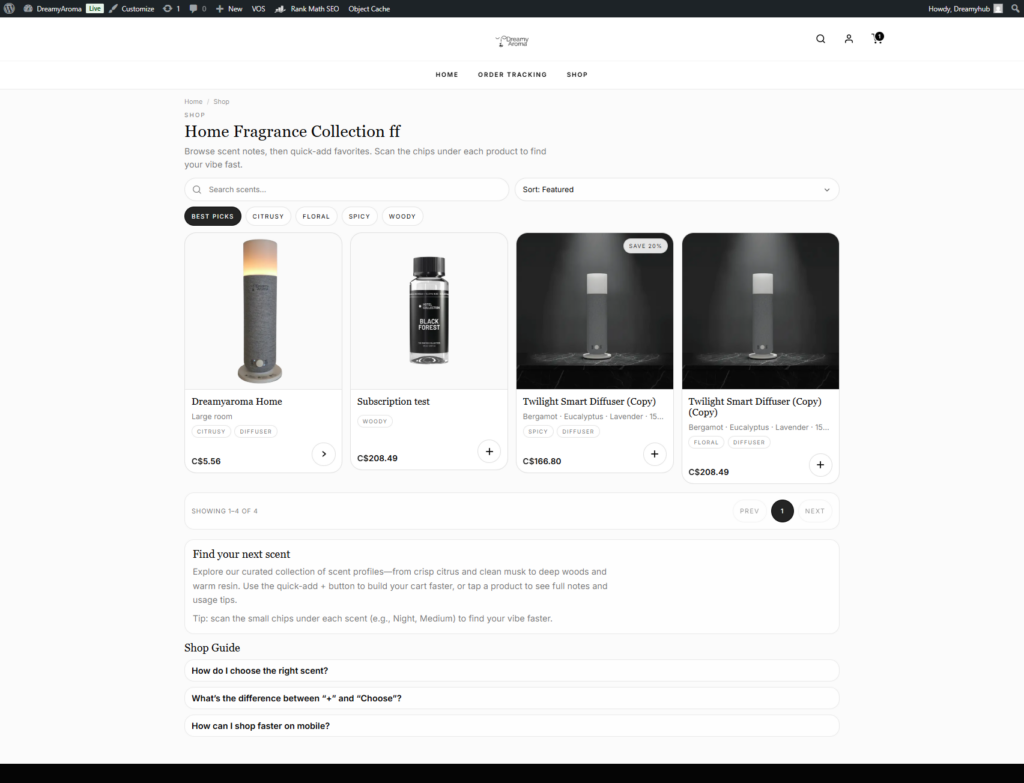
Product Card Design System
The product card component is the core visual element of the storefront.
The design prioritizes:
• clean typography
• large product imagery
• subtle hierarchy between product name and price
• balanced spacing for luxury aesthetics
Each card follows a strict structure to ensure visual consistency across all product grids.
The card system was later evaluated for reuse across the homepage to maintain UI consistency throughout the storefront.
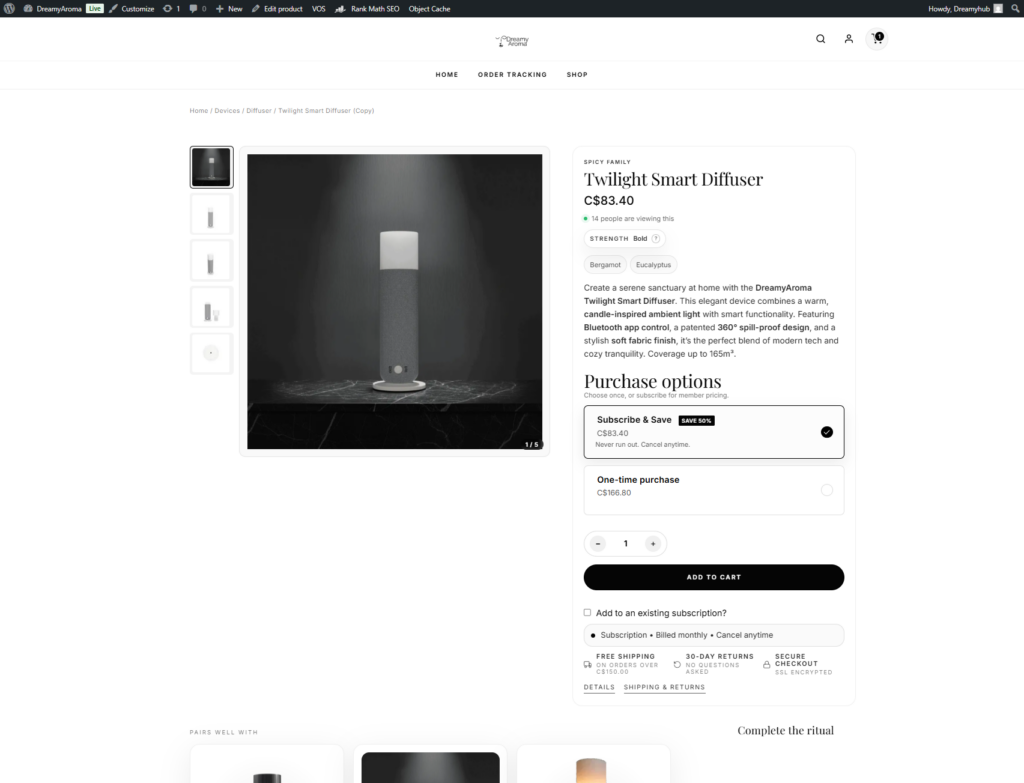
Homepage Product Rendering Engine
Rather than relying on default WooCommerce widgets, the homepage uses a custom product rendering system.
Products are dynamically sourced from curated category buckets such as:
• fragrance families
• device collections
This approach allows the homepage to function as a merchandising layer rather than simply displaying random product listings.
Benefits include:
• better storytelling around product categories
• improved navigation into the catalog
• controlled presentation of featured products
Performance Optimization
A major goal of the project was reducing unnecessary frontend overhead.
Optimization strategies included:
• removal of unused WooCommerce templates
• elimination of redundant wrapper markup
• strict control of CSS selectors
• reduction of DOM depth in product grids
By replacing WooCommerce’s default loop structure with a lean custom renderer, the platform improves page rendering efficiency while maintaining flexibility.
UX Philosophy
DreamyStudio26 follows a minimalist luxury design philosophy.
Key principles include:
• Product-first presentation
• Clean visual hierarchy
• Spacious layouts
• Subtle interactions rather than aggressive animations
The interface intentionally avoids discount-heavy visual patterns common in large marketplace stores.
Instead, the goal is to replicate the feeling of browsing a boutique fragrance brand.
Technical Stack
WordPress
WooCommerce
Custom PHP theme architecture
Modern CSS layout systems
Performance-optimized frontend structure
My Role
I was responsible for the complete storefront engineering and UX architecture of the platform.
Responsibilities included:
• designing the shop interface system (V15)
• building the product card design architecture
• engineering the homepage product rendering system
• overriding WooCommerce archive templates
• optimizing DOM structure and frontend performance
• defining internal UI standards for the storefront
Results
The final platform achieves several improvements over traditional WooCommerce implementations:
• A distinctive luxury storefront design
• A consistent product presentation system
• Reduced frontend complexity
• Faster rendering performance
• Greater control over future UI expansion
DreamyStudio26 demonstrates how a standard e-commerce engine can be transformed into a refined brand-driven storefront through careful engineering and UI system design.
Dreamy AC Engine
Dreamy AC Engine
Intelligent Abandoned Cart Recovery System for WooCommerce
Dreamy AC Engine is a custom-built abandoned cart recovery plugin developed to help WooCommerce stores recover lost revenue through intelligent cart tracking, behavioral triggers, and automated recovery campaigns.
The project was designed to solve a common limitation in typical abandoned cart plugins: most rely on simple email reminders and provide limited control over recovery logic, analytics, and campaign customization. Dreamy AC Engine approaches the problem as a revenue recovery engine, combining cart tracking, automation, and campaign management into a unified system built specifically for performance and scalability.
The Problem
In most e-commerce environments, a significant percentage of shopping carts are abandoned before checkout. While many plugins attempt to address this issue, they often suffer from several limitations:
• Limited visibility into cart abandonment behavior
• Basic reminder emails with little personalization
• Weak analytics on recovery performance
• Heavy plugin overhead that slows down the site
• Lack of integration between cart data, campaigns, and conversion tracking
For stores operating at scale, these limitations result in missed recovery opportunities and poor insight into customer behavior.
Dreamy AC Engine was built to provide a more robust and flexible solution.
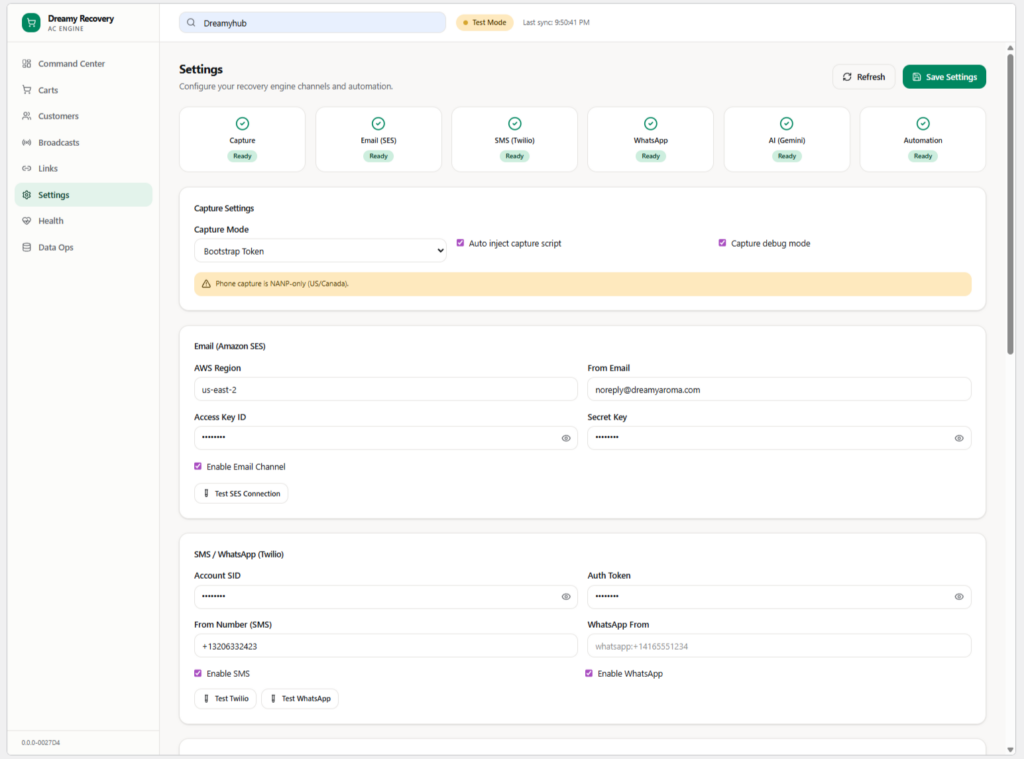
The Solution
Dreamy AC Engine introduces a modular abandoned cart recovery system designed specifically for WooCommerce environments.
The plugin captures cart activity in real time and triggers automated recovery campaigns when a cart meets abandonment criteria. Campaigns can then be delivered through automated email sequences that encourage the user to complete their purchase.
The system emphasizes:
• Accurate cart tracking
• intelligent recovery triggers
• clean campaign management workflows
• minimal performance overhead
This approach turns abandoned carts into actionable revenue opportunities.
System Architecture
Dreamy AC Engine is built as a standalone WordPress plugin designed to integrate directly with WooCommerce’s cart and session systems.
Core Components
Cart Tracking Layer
Captures cart activity, product selections, and session data to determine when a cart becomes abandoned.
Abandonment Detection Engine
Uses timing rules and session monitoring to classify when a cart should trigger a recovery campaign.
Campaign Automation System
Manages automated email sequences designed to bring the user back to their cart.
Recovery Tracking Module
Monitors when users return and complete purchases, allowing the system to measure recovery success.
Intelligent Cart Tracking
Dreamy AC Engine continuously monitors cart activity during the shopping session.
The tracking system records:
• cart contents
• product details
• timestamps of activity
• session identifiers
When a user leaves the site without completing checkout, the system determines whether the cart meets abandonment criteria and initiates the recovery workflow.
This provides more reliable abandonment detection compared to basic timeout-based solutions.
Automated Recovery Campaigns
The plugin includes a campaign engine designed to re-engage customers after cart abandonment.
Campaigns can include:
• reminder emails
• product summaries from the abandoned cart
• purchase incentives or reminders
• direct links that restore the cart
Each campaign can be structured as a sequence, allowing stores to gradually encourage the user to return and complete the purchase.
Abandoned Cart Product Rendering
A key feature of Dreamy AC Engine is the abandoned cart product grid, which visually presents the items the customer left behind.
This grid typically includes:
• product image
• product title
• short description
• price information
• quick return-to-cart link
The design emphasizes clarity and familiarity so that customers immediately recognize the items they previously selected.
Analytics & Recovery Insights
The plugin also provides insights into cart abandonment behavior and recovery performance.
Metrics tracked include:
• total abandoned carts
• recovered carts
• recovery conversion rate
• campaign performance
These insights help store owners understand which campaigns are effective and where recovery strategies can be improved.
Performance Optimization
Many abandoned cart plugins introduce heavy database operations and tracking scripts that degrade site performance.
Dreamy AC Engine was built with performance in mind:
• lightweight tracking logic
• optimized database queries
• minimal frontend scripts
• controlled event tracking
This ensures that cart tracking does not interfere with the shopping experience.
Technical Stack
WordPress Plugin Architecture
WooCommerce Cart & Session APIs
Custom PHP backend logic
Automated email campaign system
Optimized database structures for cart tracking
My Role
I designed and developed the entire abandoned cart recovery system, including:
• plugin architecture and data model
• cart tracking and abandonment detection logic
• recovery campaign engine
• abandoned cart product grid rendering
• performance optimization and query design
• analytics tracking for recovery performance
Results
Dreamy AC Engine transforms abandoned carts from lost sales into measurable revenue opportunities.
Key benefits include:
• improved cart recovery rates
• better insight into customer purchasing behavior
• automated re-engagement workflows
• minimal impact on storefront performance
The plugin provides WooCommerce stores with a scalable and intelligent recovery system designed to maximize revenue from otherwise lost transactions.
Dreamy Support Desk
Dreamy CRM
Customer Lifecycle & Relationship Management System for WooCommerce
Dreamy CRM is a custom-built customer relationship management plugin designed specifically for WooCommerce stores. The system provides merchants with deeper visibility into customer behavior, purchasing patterns, and lifecycle interactions, enabling more intelligent engagement strategies and long-term customer retention.
While most WooCommerce stores rely on fragmented tools for marketing, analytics, and customer management, Dreamy CRM consolidates these capabilities into a single unified system built directly into the WordPress environment.
The goal of the project was to create a lightweight yet powerful CRM layer tailored for e-commerce operations rather than generic sales pipelines.
The Problem
WooCommerce provides strong commerce capabilities but limited native customer intelligence tools. Store owners often rely on multiple external services to manage customer relationships, including:
• email marketing platforms
• analytics dashboards
• customer segmentation tools
• campaign management software
This fragmented ecosystem introduces several issues:
• limited visibility into the full customer lifecycle
• disconnected customer data across platforms
• slower decision making due to scattered insights
• higher operational costs from multiple SaaS subscriptions
For growing e-commerce businesses, a unified customer intelligence system becomes essential.
Dreamy CRM was developed to address this gap.
The Solution
Dreamy CRM introduces a centralized customer intelligence layer that integrates directly with WooCommerce.
The plugin aggregates customer behavior data and transforms it into actionable insights through:
• customer profiles
• purchase history tracking
• behavioral segmentation
• lifecycle analytics
Instead of managing customers as isolated transactions, Dreamy CRM allows store owners to understand the full relationship between the customer and the brand.
System Architecture
Dreamy CRM is implemented as a modular WordPress plugin that extends WooCommerce’s existing data structures while maintaining compatibility with the platform’s core commerce logic.
Core System Components
Customer Data Engine
Aggregates WooCommerce customer data including orders, product interactions, and activity history.
Customer Profile Layer
Creates unified customer profiles containing order history, purchasing behavior, and engagement patterns.
Segmentation Engine
Allows customers to be grouped based on behavior, purchase frequency, or product preferences.
Insights & Analytics Module
Provides reporting dashboards that reveal patterns in customer activity and purchasing behavior.
Unified Customer Profiles
One of the central features of Dreamy CRM is the unified customer profile.
Each profile aggregates key information including:
• purchase history
• total lifetime value
• product preferences
• order frequency
• last activity
This consolidated view allows store owners to quickly understand the relationship between a customer and the store.
Instead of navigating multiple dashboards, the information is accessible directly within the WooCommerce environment.
Customer Segmentation Engine
Dreamy CRM enables behavioral segmentation based on real store data.
Segments can be created using criteria such as:
• frequent buyers
• high-value customers
• recently inactive customers
• product category preferences
This segmentation allows merchants to tailor marketing strategies and communication efforts toward specific customer groups.
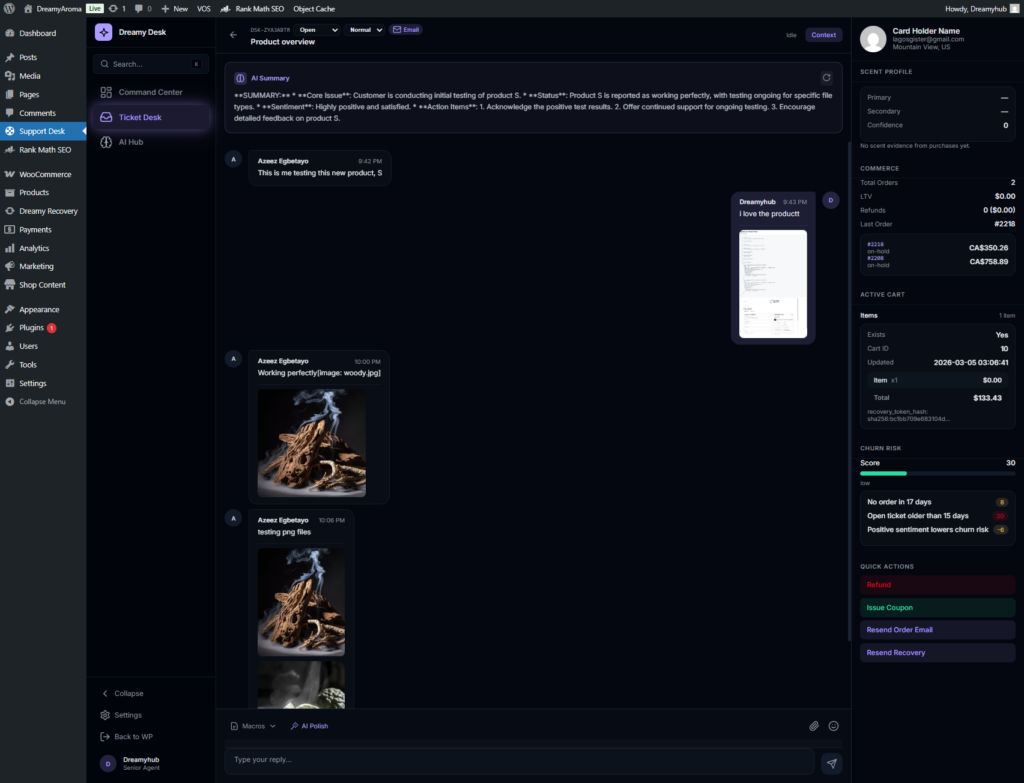
Lifecycle Analytics
Dreamy CRM also introduces lifecycle-level analytics that help merchants understand how customers interact with the store over time.
The system can reveal patterns such as:
• how frequently customers return to purchase
• which products drive repeat purchases
• which customers are at risk of churn
These insights help businesses make more informed decisions around marketing campaigns and retention strategies.
WooCommerce Integration
The plugin integrates directly with WooCommerce’s core structures, allowing it to leverage existing order and customer data without introducing unnecessary duplication.
Integration points include:
• WooCommerce order records
• customer accounts
• product metadata
• purchase history data
This design ensures compatibility with the existing commerce engine while expanding the store’s analytical capabilities.
Performance Considerations
Dreamy CRM was designed to operate efficiently within the WordPress environment.
Key architectural decisions include:
• optimized database queries
• minimal frontend overhead
• modular plugin architecture
• efficient aggregation of customer data
This ensures that customer intelligence features do not negatively impact storefront performance.
Technical Stack
WordPress Plugin Architecture
WooCommerce Customer & Order APIs
Custom PHP data aggregation systems
Optimized MySQL queries for behavioral insights
My Role
I designed and developed the entire CRM system architecture, including:
• customer data aggregation logic
• customer profile structure
• segmentation engine design
• analytics dashboard architecture
• WooCommerce data integration
• performance optimization strategies
The objective was to create a CRM system tailored specifically for e-commerce businesses operating on WooCommerce.
Results
Dreamy CRM transforms WooCommerce from a transaction-focused platform into a customer intelligence platform.
The system enables merchants to:
• better understand their customers
• identify high-value customer segments
• track purchasing behavior over time
• develop more targeted engagement strategies
By centralizing customer insights within the WooCommerce environment, Dreamy CRM reduces reliance on multiple third-party tools while giving merchants more control over their customer relationships.